

Sustainability

Building a sustainable vegetable business for the health of future generations.

Down Arrow

WHAT SUSTAINABILITY MEANS TO US

To us, sustainability means meeting the needs of today, whilst protecting productivity for the future, safeguarding environmental health, improving livelihoods, and maintaining profitability. We strive to improve all aspects of our business so as to be more sustainable and ultimately achieve our vision.

A key part of this is measuring the impact of changes and applying learnings and making improvements ongoing.

Below are some of our sustainability highlights, including soil health, waste reduction, green energy, water management and ethics. Highlights of our investment in community initiatives can be found here.

Sustainability highlights in numbers

SOIL: 10,500 Acres
In the UK we invest in initiatives such as hedgerow planting, cover crops and organic fertiliser to enrich our soil health
WASTE: 2010
Our green energy year zero, we are fully powered by our waste
ENERGY: 2x
We produce more than twice the energy we need from our green factory waste, we sell the surplus to National Grid
WATER: 280K
The number of litres of water we will reuse daily from 2022 for irrigation by capturing and cleaning our waste water through our own water treatment plant
ROAD JOURNEYS REDUCED: 5,000
The number of tractor and lorry journeys we cut out every year by digesting our waste on site
SOLAR ENERGY: 5,494
The number of solar panels across our operations sites. Generating approximately 2,240 MWh of energy annually, saving 399 tonnes of CO2 emissions…equivalent to planting 20,563 trees every year!

SOIL: Friends of the earth

We farm a lot of land and we are dedicated to looking after every single acre. Integrated crop management techniques, soil health and crop nutrition are at the heart of this commitment.

Cover crops

We keep our soils covered up through the year using cover crops. This natural crop management practice reduces soil erosion, encourages biodiversity, retains nutrients, enhances soil structure, and helps to capture carbon in the soil (carbon sequestration).

Switching to organic fertiliser

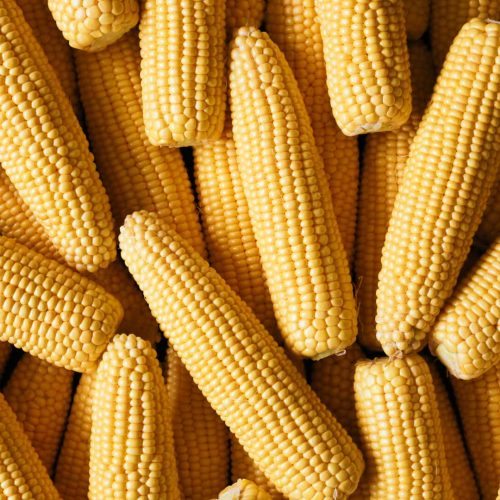
Our anaerobic digestion plant not only provides us with energy and heat, but also provides us with a large proportion of our fertiliser requirement. The ‘digestate’ that comes out of the AD plant is rich in nitrogen, phosphorus, and potassium, together with lots of micro nutrients. It’s also organic. Using digestate produced from waste sweetcorn husks, allows us to grow more sweetcorn using less conventional fertiliser.

Promoting biodiversity

We invest in initiatives to promote biodiversity, such as hedgerow, tree and wild flower plantings. In addition to helping improve soil structure, these iniatives help build our resilience to extreme environmental change and supports key ecosystem services.

Peter Barfoot, CBE (Services to Sustainable Farming)

“The quality of the soil and the biodiversity balance mean everything when producing healthy crops. To farm successfully, you need to be a custodian of nature.”

WASTE: Prevention, redistribution and repurposing

It is a heartbreaking fact that 11 million people in the UK are struggling to eat, whilst a quarter of all food produced goes to waste, significantly contributing to climate change in the process. As a signatory to the UK Food and Drink Pact, Barfoots are wholeheartedly committed to reducing food waste. We do this through prevention,  redistribution of edible waste to those in need, and repurposing inedible waste into energy and organic fertiliser through our Anearobic Digestion Plant. 

By embedding this approach into every facet of our operations, Barfoots has transformed food-waste management from a compliance exercise into a business-critical driver of efficiency, community benefit and circularity. 


Food redistribution

We contribute to a number of schemes to relieve food poverty and reduce edible food waste. Our partner charities, which include FareShare and UKHarvest, collect surplus quality food, and distribute it to those in need. Since 2020 to December 2025, we have donated over 3.5 million meals worth of delicious nutritious vegetables. We continuously look at ways we can keep nutritious food within the human food chain, providing it in a format which is practical to handle, store and prepare, an example op this is our recent Project Rubble in collaboration with FareShare and packaging partner Saica Flex. 


Relieving food poverty

“If we can provide those who are less fortunate than most with the opportunity to eat our vegetables, then donating our surplus produce is simply the right thing to do.” Keston Williams, Chief Operations Officer

ENERGY: Generating green power

We need a lot of energy to power our business and we produce it all ourselves. Everything we do is fuelled by green energy. We are self-sufficient, thanks to our investment in sustainable waste management. Anaerobic digestion is at the heart of this commitment. In fact, we produce much more energy than we need for our factories and fields. We are a net exporter, selling our surplus back to National Grid. Watch our film on how our anaerobic digestors work.

As our business has grown, so has our dedication to sustainable energy. We continue to explore ways to reduce our carbon footprint, investing in technology such as photovoltaic cells, LED lighting, and artificial fertiliser replacement.

Harvesting the sun

In 2024 our epic state-of-the-art solar installation went live, ensuring our ongoing energy independence as our business grows. The 5,454 solar panel system across two of our operations sites will generate approximately 2,240 MWh of energy annually, saving 399 tonnes of CO2 emissions…equivalent to planting 20,563 trees every year!

WATER: Safeguarding a vital resource

Water is a precious commodity that we have a duty to protect and use responsibly. It gives life to the crops that sustain our business and to the people and communities that are part of what we do.

To this end, we are committed to sustainable water use and ensuring high standards of water management in the areas where we farm.


Water Treatment Plant

Our new water treatment facility cleans and converts all our factory waste water into irrigation water for our crops. Currently it can treat 300 cubic meters a day, enough to fill an Olympic sized swimming pool in a week.

The water treatment plant adds further to Barfoots’ sustainability credentials, demonstrating how we continue to lead the way.

Alliance for Water Stewardship

Along with a number of high-profile partners, including Marks & Spencer, Coop, DanPer and SGS, we are involved in the development of a water stewardship standard for the Peruvian asparagus industry.

The aim of the initiative is to address shared water challenges and bring issues to the attention of national-level stakeholders, with the purpose of creating benefits for local communities, growers and retailers.

Infrastructure and storage

We invest in infrastructure such as storage and piping, and irrigation technology that enables us to grow all of our crops across even in dry seasons.

ETHICS: We take great pride in our conduct

We hold ourselves to very high standards in everything we do and we take great pride in our conduct. This commitment is reflected in the way we work, how we safeguard our people, the projects we invest in and the goals we achieve. Below are links to statements and reports regarding our ethics.

PREVENTION OF HIDDEN LABOUR EXPLOITATION
ETHICAL TRADING AND HUMAN RIGHTS

GENDER PAY GAP REPORTING: 2026, 2025,  2024
PRIVACY NOTICE FOR APPLICANTS
2025 MODERN SLAVERY ACT TRANSPARENCY STATEMENT
CHILD LABOUR POLICY
HUMAN RIGHTS COMMITMENT
TAX STRATEGY